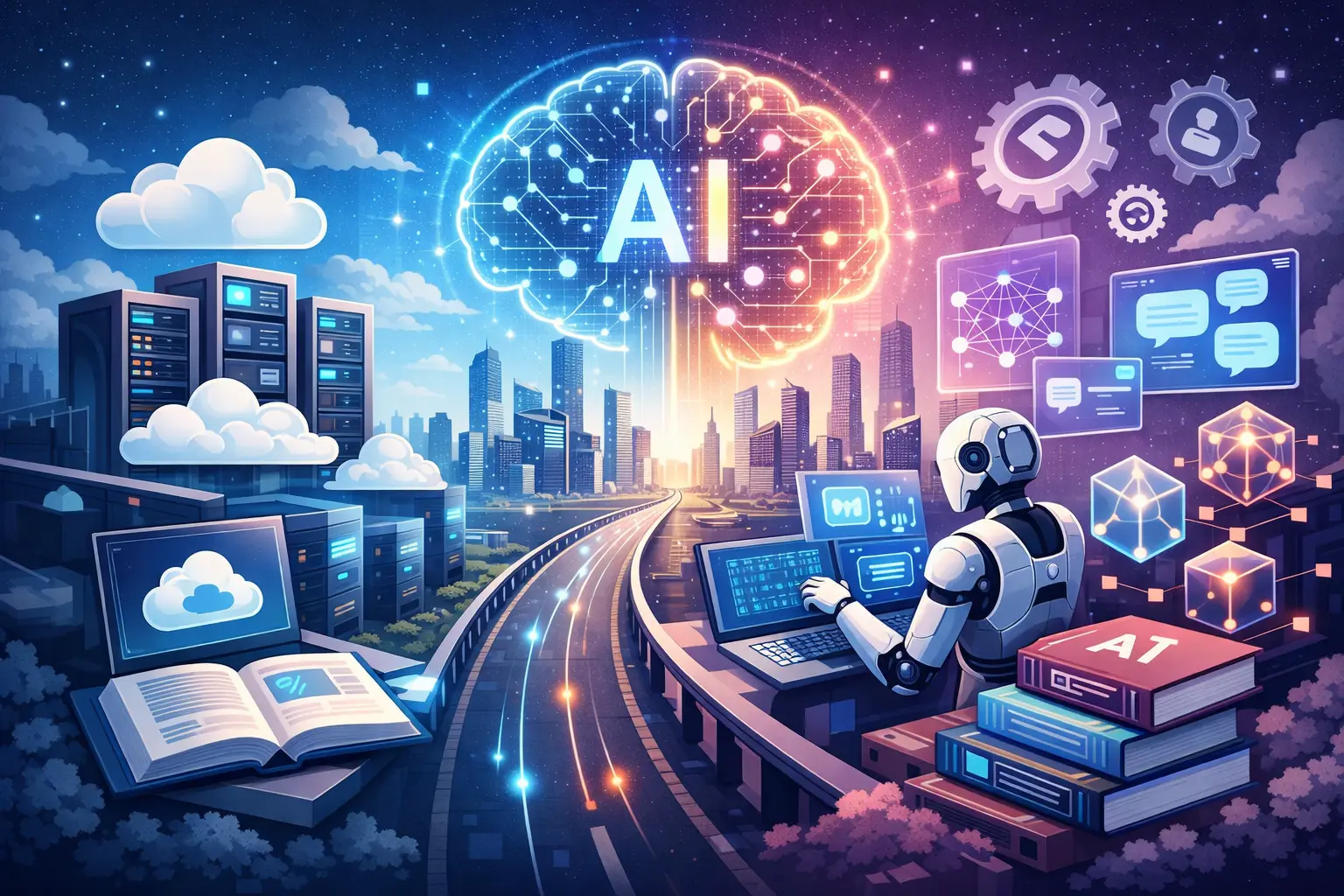
The waves of technology keep evolving; only by actively embracing change can we continue to create value. In 2025, I chose to move from Cloud Native to AI Native—this year marked a key turning point for personal growth and system reinvention.
2025 was a turning point for me. This year, I not only changed my technical direction but also the way I approach problems. Moving from Cloud Native infrastructure to AI Native Infrastructure was not just a migration of content, but an upgrade in mindset.
This year, I conducted a large-scale refactoring of the website and systematically organized the content. Beyond the technical improvements, I want to share my thoughts and changes throughout the year.
A Bold Shift: Embracing the AI Native Era
At the beginning of 2025, I made an important decision: to reposition myself from a Cloud Native Evangelist to an AI Infrastructure Architect. This was not just a change in title, but a strategic transformation after careful consideration.
As I witnessed the surge of AI technologies and the rise of Agent-based applications reshaping software, I realized that clinging to the boundaries of Cloud Native might mean missing an era. So, I systematically adjusted the website’s content structure, shifting the focus toward AI Native Infrastructure.
This transformation was not about abandoning the past, but extending forward from the foundation of Cloud Native. Classic content like Kubernetes and Istio remains and is continuously updated, but new topics such as AI Agent and the AI OSS landscape have been added, forming a more complete knowledge map.
Content Creation: From Technical Details to Ecosystem Perspective
AI Agent: Building Systematic Knowledge
Agents represent a major evolution in software for the AI era. When I tried to understand Agent design principles, I found fragmented information everywhere but lacked a systematic knowledge base.
So I created content that analyzes the Agent context lifecycle and control loop mechanisms, summarizing several proven architectural patterns. To make complex knowledge easier to digest, I organized it into logical sections so readers can learn step by step.
AI Tool Ecosystem: Mapping the Open Source Landscape
AI tools and frameworks are emerging rapidly, with new projects appearing daily. To help readers quickly grasp the ecosystem, I built a comprehensive AI OSS database.
This database covers everything from Agent frameworks to development tools and deployment services. I not only included active projects but also established an archive mechanism, preserving detailed information on over 150 historical projects. More importantly, I developed a scoring system to objectively evaluate projects across dimensions like quality and sustainability, helping readers decide which tools are worth investing time in.
Blogging: Capturing Technology Trends Faster
In 2025, I wrote over 120 blog posts. Compared to previous years, these articles focused more on observing and reflecting on technology trends, rather than just technical tutorials.
I started paying attention to deeper questions: How will AI infrastructure evolve? What does Beijing’s open source initiative mean for the AI industry? What ripple effects might a tech acquisition trigger? These articles allowed me and my readers to not only see “what” technology is, but also “why” and “what’s next.”
User Experience: Making Knowledge Easier to Discover and Consume
No matter how good the content is, if it can’t be easily found and read, its value is greatly diminished. In 2025, I invested significant effort into website functionality, with one goal: to provide readers with a smoother reading experience.
Comprehensive Search Upgrade
As the volume of content grew, the original search function could no longer meet demand. I redesigned the search system to support fuzzy search and result scoring, and optimized index loading performance. More importantly, the new search interface is more user-friendly, supporting keyboard navigation and category filtering so users can find what they want faster.
Multi-Device Experience Optimization
Mobile reading experience has improved significantly. I refactored the mobile navigation and table of contents, making reading on phones much smoother. Dark mode is now more refined, fixing several display issues and ensuring images and diagrams look good on dark backgrounds.
Efficiency Revolution in Content Distribution
A major change was optimizing the WeChat Official Account publishing workflow. Previously, publishing website content to WeChat required manual handling of many details; now, it’s almost one-click export. This workflow automatically processes images, metadata, styles, and all details, reducing a half-hour task to just a few minutes.
Additionally, I added a glossary feature for technical term highlighting and tooltips; improved SEO and social sharing metadata; and cleaned up outdated content. These seemingly minor improvements quietly enhance the user experience.
Content Evolution: More Dimensional Knowledge Expression
Looking back at content creation in 2025, I found clear changes in several dimensions.
From Tutorials to Observations
Early content leaned toward technical tutorials and practical guides, showing “how to do.” This year, I focused more on “why” and “what are the trends.” I wrote more technology trend analyses, ecosystem maps, and in-depth case studies. These may not directly teach you how to use an API, but they help you understand the direction of technological evolution.
From Chinese to Bilingual
AI is a global wave and cannot be limited to the Chinese-speaking world. In 2025, I wrote bilingual documentation for almost all new AI tools, and important blog posts also have English versions. This increased the workload, but allowed the content to reach a broader audience.
From Text to Multimedia
Text is efficient, but not all knowledge is best expressed in words. This year, I used many architecture and schematic diagrams to explain complex concepts, adding 59 new charts. These visual elements lower the barrier to understanding, making abstract concepts more intuitive. I also optimized image display in dark mode to ensure consistent visual experience.
Development Approach: Embracing AI-Assisted Programming
2025 was not only a year of shifting content themes toward AI, but also a year of deep practice in AI-assisted programming.
I developed a VS Code plugin and created many prompts to automate repetitive tasks. I experimented with various AI programming tools and settled on a toolchain that suits me. I even migrated the website to Cloudflare Pages and used its edge computing services to develop a chatbot. These practices greatly improved development efficiency, giving me more time to focus on thinking and creating rather than mechanical coding.
This made me realize: AI will not replace developers, but developers who use AI well will replace those who do not. I also shared more insights to help others master AI-assisted programming.
Looking Ahead to 2026: Keep Moving Forward
Looking back at 2025, the site underwent a profound transformation—from a Cloud Native tech blog to an AI infrastructure knowledge base. But this is just the beginning, not the end.
Looking forward to 2026, I plan to continue deepening in several areas:
- Enhancing the knowledge system: Continue to supplement GPU infrastructure and AI Agent content, especially practical cases and performance tuning knowledge.
- Tracking ecosystem evolution: AI tools and frameworks iterate rapidly; I need to keep up with this fast-changing ecosystem and update content in a timely manner.
- Deepening engineering practice: Share more practical AI engineering experience to help readers turn theory into practice.
- Exploring knowledge connections: Consider building a knowledge graph to connect different content sections, providing smarter navigation and recommendations.
Summary
2025 was a year of change and growth. From Cloud Native to AI Native, from technical practice to ecosystem observation, both the content and functionality of the site have made qualitative leaps.
What makes me happiest is that this transformation allowed me and my readers to stand at the forefront of the technology wave. We are not just learning new technologies, but thinking about how technology changes the world and the way we write software.
The waves of technology keep evolving; only by actively embracing change can we continue to create value. Thank you to every reader for your companionship and support. I look forward to sharing more insights and practices in 2026.
Further Reading: