In a bamboo-weaving workshop in Anji, holding a strip of bamboo split hair-thin, I realized for the first time: a bolt of cloth, a machine, a country, all begin with this single thread in the hand.

Introduction
This is something I’d been thinking about for a long time, without ever quite sorting it out.
In February this year, our company offsite took us to Anji, in Zhejiang province. It’s famous bamboo country in China, the mountains covered in moso bamboo, and the locals have been weaving with it for generations. Bamboo weaving is a national intangible cultural heritage. The offsite included a hands-on session for us to try it ourselves.
I hadn’t expected much from this kind of “experiential activity.” But once I actually sat down, picked up a bamboo strip, and listened to the old master explain how to lift, press, and raise the threads, my mind started to wander. Up and down, lift and press, the warp and weft interlacing in his hands until a pattern slowly emerged. The motion was deeply repetitive, a fixed rhythm, a clear logic.
And in that moment an almost absurd thought popped into my head: this is just 0 and 1.
A warp thread raised is 1, pressed down is 0. Unfold a piece of cloth and it’s a two-dimensional structure made of 0s and 1s. And the thing the old master kept referring to as the “flower program” (花本), the pre-designed sequence of warp-lifting, is essentially a program: follow it, and you weave exactly the pattern you intended.
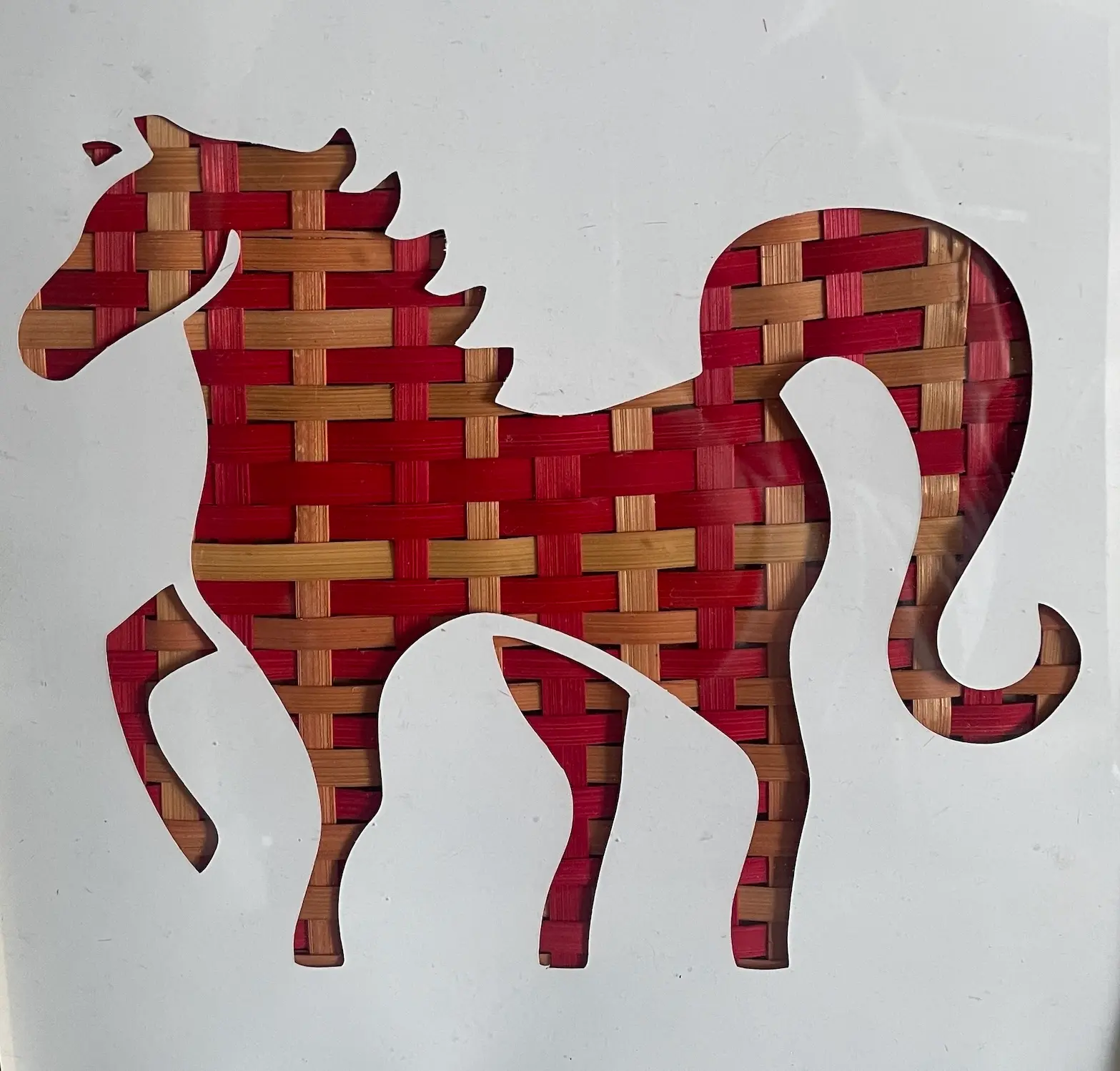
That thought flashed by and I didn’t make much of it. But then in March I went to the Netherlands and spent a week in Amsterdam. The two experiences sat together, and some feelings that had been vague began to sharpen: how could a single strip of bamboo, a single motion, connect to the looms of two centuries ago, to today’s computers, even to a country’s industrialization?
I looked it up later and found I wasn’t the first to make the connection. Many historians of technology argue that weaving is one of the earliest forms of large-scale information encoding. Now, in June, I’m sitting down to try to lay out this thread. This isn’t a technical piece. It’s a personal, cultural reflection.
A Cultural Contrast
Let me start with the Netherlands.
What struck me most about that country wasn’t the windmills or the tulips, but a quality that the whole nation seems to exude: restraint, order, and an almost engineering-like way of being. The canals are dug, the land reclaimed from the sea is called a “polder,” and the windmills were never there to look pretty. They were built to pump water and drain the land. A country that sits below sea level literally engineered itself out of the sea. Though the windmills aren’t only about drainage. The wind in the Netherlands is genuinely strong. In March I got battered by it. It’s a wind that pushes at you constantly. So a below-sea-level country hauled itself out of the sea with engineering, and along the way put that fierce wind to work too.
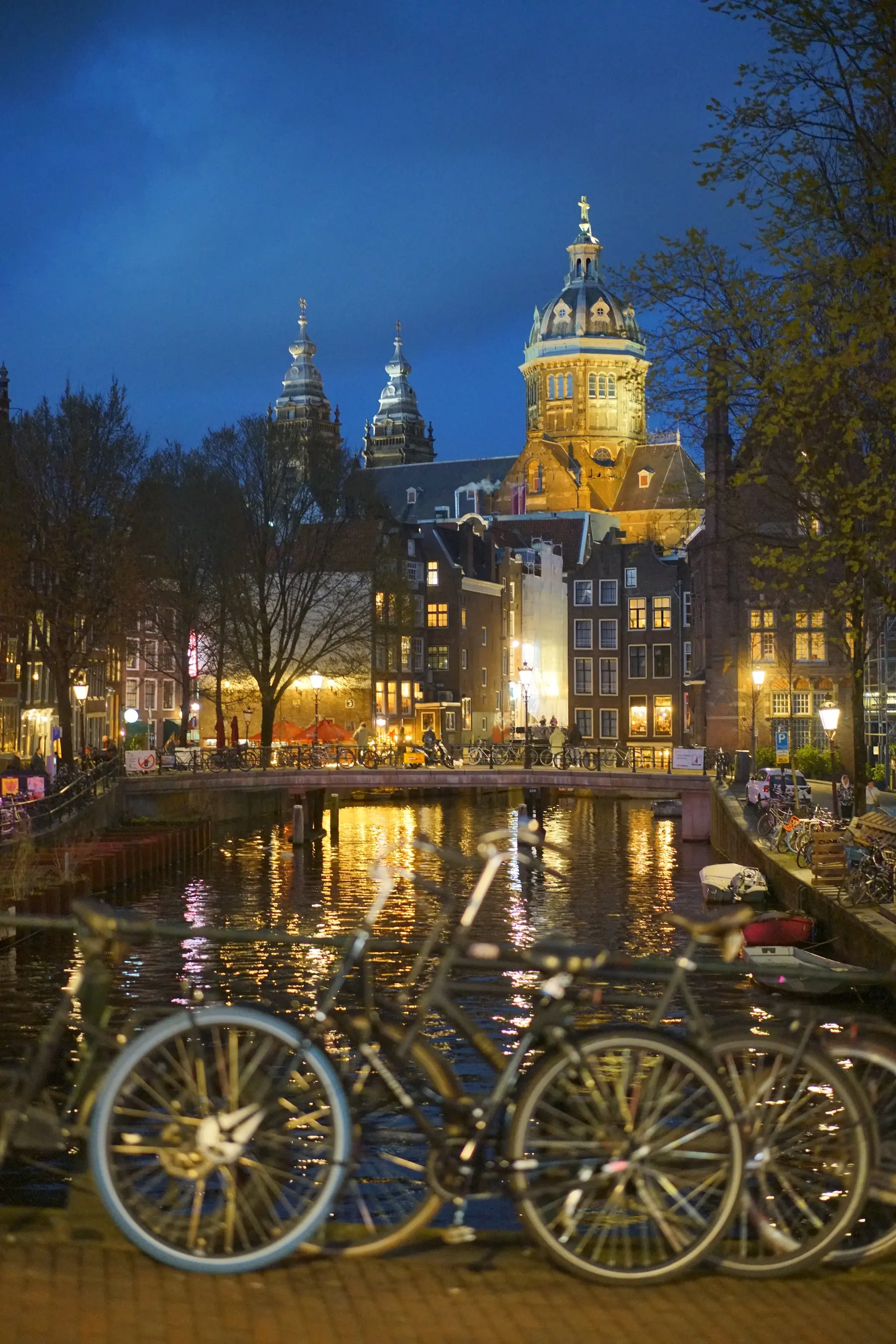
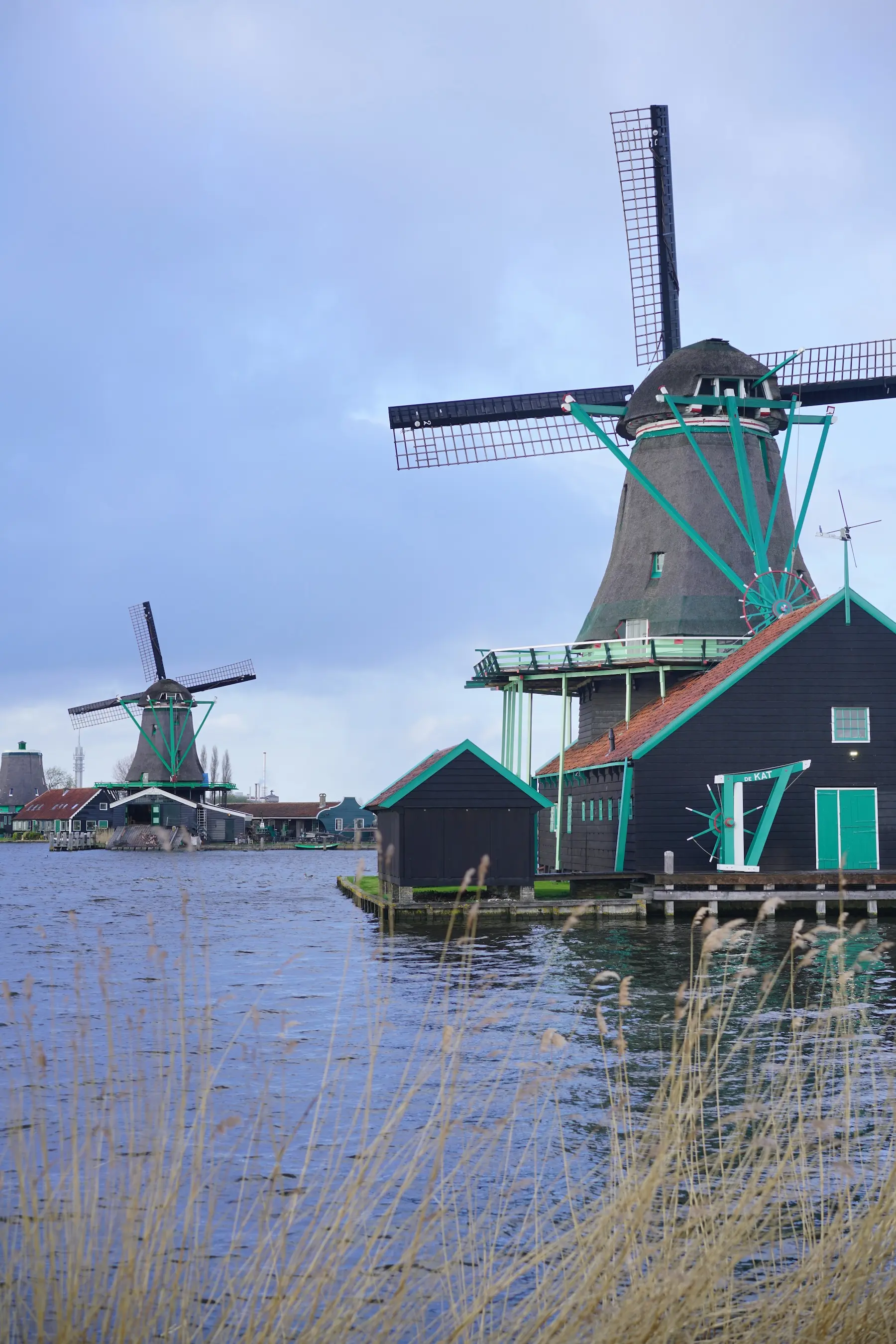
This quality seeps into every corner of daily life. Shops close around six in the evening, the streets slowly quiet down, and you almost never hear a car horn. Cars stop well ahead of time to let you cross. One evening I wandered a little too close to the bike lane, and a passing car actually rolled down its window to remind me to use the sidewalk. It surprised me at first, and then I understood: the rules there are clear, and everyone assumes you’ll follow them too.
This temperament even shows up in how people get around. In the city center, not many people drive. Bicycles are the default. For one thing, the Netherlands is flat, so cycling takes no effort. For another, dedicated bike lanes are everywhere, and the streets are narrow, which makes them ill-suited to cars. Add that commutes are generally short, and cycling is just right. What’s interesting is that even in the southern suburbs, where the roads are wide and every household has a car, you still see a lot of people on bikes. For them, a bicycle isn’t exercise. It’s the default way to commute.
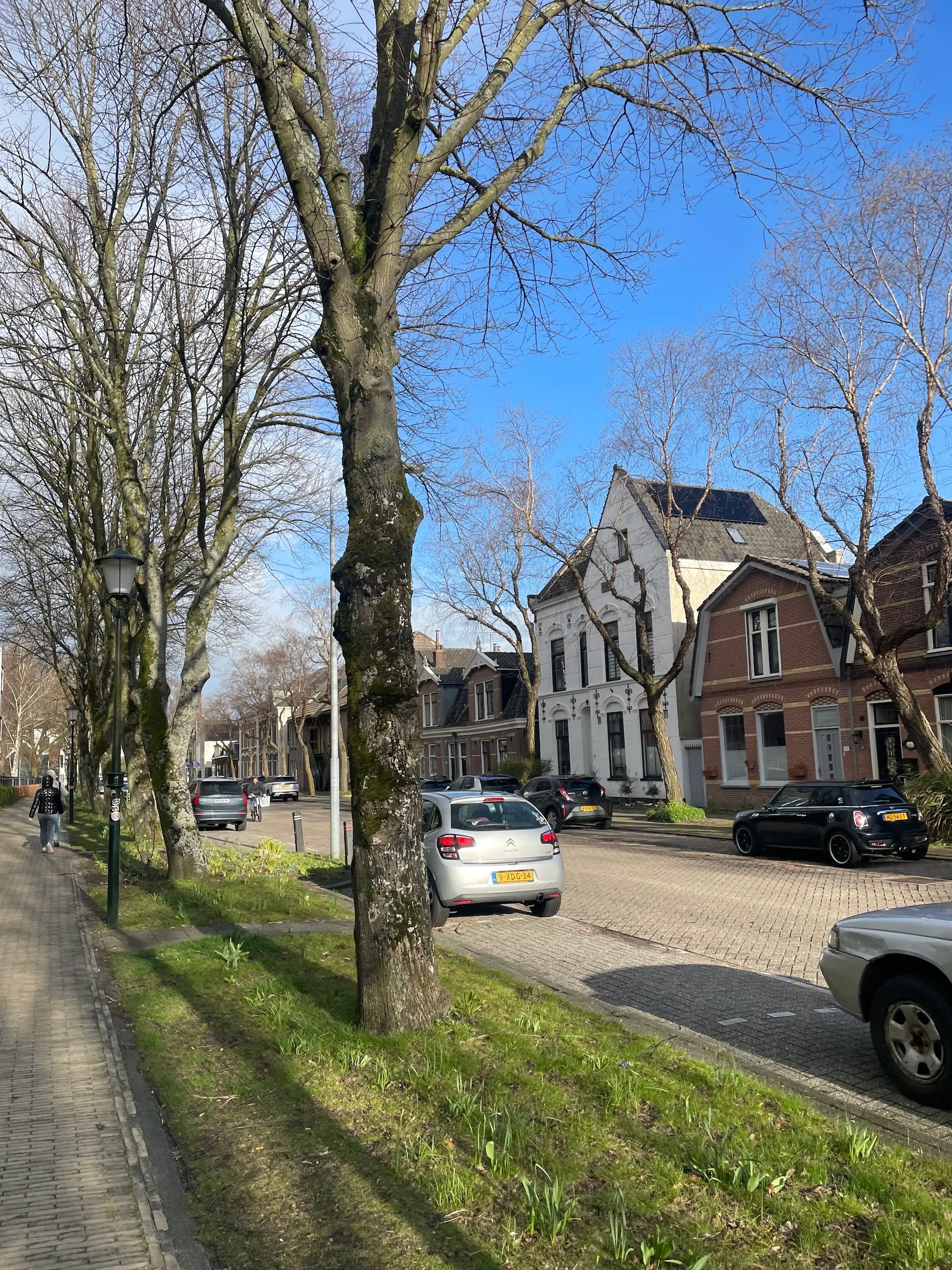
I set that against the noise and speed of China, the loud, garish signboards back home. These two temperaments are really two paths of modernization. The Netherlands is an early, slow-and-steady kind of country, from the Age of Discovery to the world’s first stock exchange, from water engineering to today’s ASML and Philips. It has always moved forward in a “long-term, restrained, systematic” way. China is a late developer chasing from behind, relying on speed, scale, and a generation’s sheer exertion to cover in a few decades what took others centuries.
Neither path is higher or lower than the other, but they settle into completely different urban textures and national characters. The ease of “closing at six” that the Dutch have is something China won’t reach for many years; and the Chinese speed of “just do it,” of laying a high-speed rail line overnight, is something the Netherlands probably couldn’t match either.
But here’s the interesting part. If you trace both civilizations back through history, these two seemingly different cultures share a common starting point. Textiles.
Why Textiles Were the Starting Point of Industrialization
Our generation is so familiar with the phrase “Industrial Revolution” that it’s almost gone numb. But have you ever asked: where did the first Industrial Revolution actually break out? Not in steel, not in coal, not in the railways. In textiles.
The British Industrial Revolution is practically a history of textile machinery. The flying shuttle in 1733 made weaving faster. The spinning jenny in 1764 let one person spin many threads at once. The water frame in 1769 began replacing human power with water power. The power loom in 1785 turned weaving into an automated process. Every one of these inventions happened inside the textile industry.
Why textiles of all things? At first it feels counterintuitive, since textiles seem too “light,” lacking the heft of making steel or guns. But think about it for a moment and it becomes obvious.
Textiles are a basic need. Everyone has to wear clothes, clothes wear out, and they have to be replaced constantly. That’s an enormous market that already existed back in the agrarian age. Once the demand is there, any gain in efficiency turns immediately into profit, into capital that can be reinvested.
More importantly, the processes of textile production are especially easy to mechanize. Spinning and weaving are deeply repetitive motions with a fixed rhythm and a clear logic, so machines can directly replace the human hand. Steelmaking, by contrast, has a far higher technical barrier, the science of chemistry wasn’t yet mature, and machine manufacturing itself needed an existing industrial base before it could even start.
And textile production has a moderate investment threshold. Building a textile mill was far cheaper than building a steel plant, so merchant capital and money from colonial trade flowed in easily. A large share of early British industrial capital came from the cotton trade and colonial trade, and that money went first into textile mills.
The most crucial point is that textiles don’t exist in isolation. They pull an entire supply chain along with them. To spin and weave, you first have to grow and transport cotton. To run machines, you have to build textile machinery. To power the machines, you need steam engines. To fuel steam engines, you have to mine coal. To move cotton and cloth, you have to build railways. So the steam engine was first deployed at scale in textile mills, the earliest railways carried cotton and cloth, and the earliest machine manufacturing served textile equipment. A supposedly “light” industry ended up dragging the entire mechanical and energy industries into being.
So textiles became the progenitor of industry not because they were the most complex, but because they were the first to satisfy four conditions at once: large demand, mechanizable, low threshold, and able to pull others along. Textiles were humanity’s first trial plot on the way from handicraft into an industrial system.
Late Developers All Come Up This Same Road
Here’s a pattern I’d never noticed before: the industrialization of late developers, almost without exception, begins with textiles.
Take Japan. Today when you think of Japanese industry, you think of Toyota cars. But how did Toyota begin? Its founder, Sakichi Toyoda, didn’t start by making cars. He invented automatic looms. In 1924 he invented the Type G automatic loom, and in 1926 he founded Toyoda Automatic Loom Works, the origin of the entire Toyota Group. It was his son Kiichiro who later moved the business into automobiles.
So Toyota cars quite literally “grew out of a loom.” Its whole system of lean production, kanban management, total quality control, carries in its bones the obsession with precision, process, and zero defects that came from making looms.
Then look at South Korea. Samsung today is a global electronics and semiconductor giant, but when it was founded it exported dried fish, vegetables, and fruit, only later moving into textiles and sugar. As South Korea industrialized after the war, textiles and garments were among its earliest foreign-exchange earners, and Samsung built its first fortune on trade and textiles in that period before pivoting to electronics in the 1970s. The Hyundai Group took a similar path, starting in engineering and heavy industry before expanding into automobiles, shipbuilding, and heavy industry.
Britain was first; Japan and Korea are the late-developer cases. You’ll notice the sequence is strikingly consistent across all three: textiles first, then light industry, then machinery, then heavy industry, and finally high-tech. Nobody designed this path. It was forced by cost and by the market. Because textiles are the lowest-threshold, largest-market form of manufacturing, every nation that wants to turn from an agrarian country into an industrial one has to start from the easiest, most necessary step.
Behind this lies a very plain truth: modernization doesn’t happen in one leap. It needs a starting point that can earn money, accumulate experience, and train the first generation of industrial workers. And textiles happen to be exactly that kind of starting point.
Where China Sits on This Road
Writing this far, I can’t help but turn and look back at China itself.
China’s modern industrialization also began with textiles. The most famous Chinese-owned enterprises of the late Qing and early Republic were almost all cotton mills. Zhang Jian founded the Dasheng Cotton Mill in Nantong. The Rong brothers, Zongjing and Desheng, founded the Shenxin Cotton Mills in Wuxi. They were China’s first generation of national industrial capitalists, rising out of textiles and holding up half of modern Chinese industry. The thinking of Zhang Jian’s generation was plain and direct: foreigners were using machines to weave cloth and taking our money, so we had to set up our own mills, weave our own cloth, and keep that money at home.
That was China’s first stretch. Back then, China was walking the very road that Britain, Japan, and Korea had all walked.
Then the road broke. War, turmoil, the planned economy. Chinese industrialization took many detours. It wasn’t until reform and opening up that it reconnected. In the 1980s the coast was blanketed with processing factories for garments, shoes, and toys. In essence it was still that same old road of “starting with textiles and light industry,” only this time China relaunched it through exports, cheap labor, and the role of factory to the world.
Further on, through the 1990s and 2000s, China pushed into heavy industry: steel, cement, shipbuilding, chemicals, catching up to the world’s front ranks one after another. Then electronics, home appliances, mobile phones. Then the internet, high-speed rail, new-energy vehicles, solar, semiconductors, and the AI that everyone talks about today.
String this line together and you realize China is actually completing the same road that every late developer has walked, only faster, fiercer, and at a far greater scale. From Zhang Jian’s cotton mills to today’s new-energy vehicles and large AI models is barely over a hundred years. In just over a century we’ve run the entire course of industrialization that took Britain more than two hundred and Japan more than a hundred, and we’re still going.
This often leaves me with a complicated feeling. On one hand, admiration: generation after generation, from Zhang Jian to today’s engineers, really did turn an agrarian country into the factory of the world and then into a country that now leads in quite a few high-tech fields. On the other hand, a faint unease: this road was run so fast that a lot of things got left behind.
A Thread That Never Broke
Inside this long thread of industrialization, there’s one detail I never forgot: that moment in the bamboo-weaving workshop in Anji back in February.
The “flower program” the old master described actually has a very old tradition in China. The drawloom of the Han dynasty used a pre-designed system of cords to control which warp threads rose and fell, so a weaver following it could reproduce complex patterns. Then in the early nineteenth century, the Frenchman Joseph Marie Jacquard pushed the idea a big step forward, using punched cards to control the weaving pattern: where the card had a hole, a hook passed through and lifted the warp; where there was no hole, the hook was blocked and the warp stayed down. Hole or no hole, that’s 1 and 0.
Jacquard’s punched cards were later borrowed by the computing pioneer Charles Babbage for his Analytical Engine, and Ada Lovelace used them to write the first computer program in history. Further on, IBM rose on punched-card machines, and if you trace today’s entire computing industry back to its source, it leads, improbably, to a loom.
And that’s not the end of it. The Transformer, matrix operations, the weights of neural networks in today’s AI, at bottom are all about computing relationships across vast fields of “warp and weft.” A loom decides which warp threads to lift and when; a neural network decides which parameters relate to which others. The logic is the same.
So the word “weaving” is more than the starting point of an industry. It’s a metaphor: for thousands of years, human beings have been learning how to encode complex things into structure, from a bolt of cloth, to a program, to a neural network. Every nation does this. They’re just at different stages.
I plan to write the technical bloodline of this story separately, in another piece. Here I’ll only point to it, to make one thing clear: the thread that began with that strip of bamboo has never broken.
Summary
From a bamboo-weaving session in Anji in February, to the canals and windmills of Amsterdam in March, and on to the industrialization of Britain, Japan, Korea, and China, what I want to say really comes down to one thing.
Every nation’s modernization is a road from a single thread woven into a net. Textiles are the common starting point of that road, not because textiles are so lofty, but because they are the most necessary, the easiest, the quickest to earn that first money and train that first generation of workers. From that starting point, some walk with restraint, like the Netherlands; some move with ferocity, like China. Some take two hundred years, some a hundred, some only a few decades. But the starting point is the same, and so is the direction: from that thread in the hand, step by step, woven into the whole of industrial civilization as we know it today.
The Dutch ease of closing at six, of no honking, of swans gliding through the canals, is a place China hasn’t reached yet. The Chinese speed of just doing it, of rolling something out overnight, is something the Netherlands couldn’t pull off either. Between these two temperaments of modernization there is no higher or lower, only trade-offs. And behind the trade-offs lies the question of where a country sits in its industrialization, and what rhythm it’s willing to pay for that net.
That day in Anji, holding a strip of bamboo, I clumsily followed the old master, lifting and pressing, weaving a small, lopsided patch of pattern. I wasn’t thinking about any of this then. But looking back, from that single lift and press, you can trace upward to the Han dynasty drawloom, outward to a country’s industrialization, and forward, faintly, to today’s computers and AI. A single strip of bamboo, connected to so much.
Perhaps the evolution of civilization, in the end, is just humanity learning, over and over, how to weave one thing into another.
Starting from a single thread.